
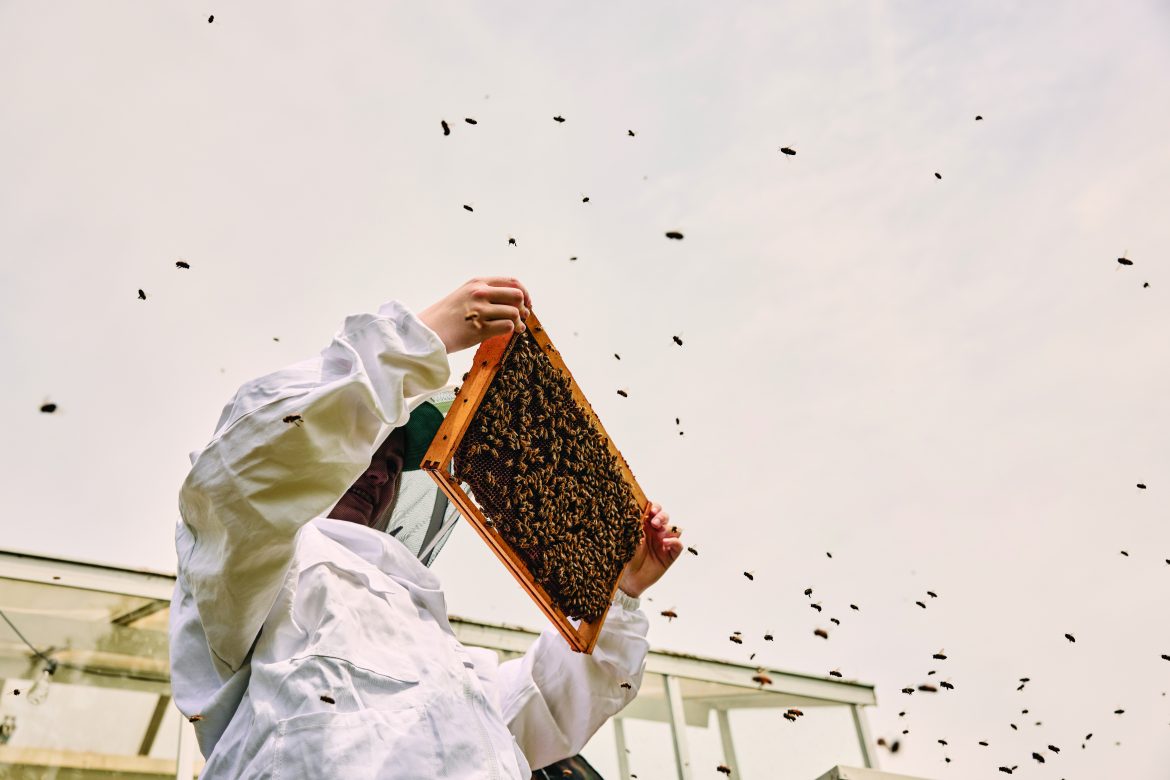
Beekeepers in Maine work towards healthier ecosystems while producing top-quality products.
By Michael Colbert
Photography by Michael D. Wilson
Transporting four million bees 1,200 miles from Georgia to Maine is a high-stakes affair. Excessive heat, cold, and moisture can quickly prove fatal to insects. At the end of April, heat in Georgia can blister. Each of the 320 colonies in the trailer contains about three pounds of bees, which, like a superorganism, generate a great deal of heat, meaning traffic on a sunny day can lead to deadly overheating. By the time you reach the Mid-Atlantic, the temperature could drop below 45 degrees, causing them to fall into cold torpor. Their muscles stop working, and if the truck goes over a bump, they’ll fall into the syrup that they’ve been eating and drown. And a spring shower can kill, too: Bees breathe through holes in their exoskeletons, and if they get wet, they can suffocate.
For Phil and Meghan Gaven, the husband-and-wife team behind Portland’s Honey Exchange, this is an annual sojourn, all in support of Maine’s beekeeping community and promoting a healthier biome. In 2011, the Gavens opened the Honey Exchange, a small yellow building situated between a meat market and a shoe repair shop. Responding to a growing desire in the community to eat more healthfully and to understand where one’s food came from and its impact on the environment, they saw an opportunity to participate in healthy local food systems through honey and its many related products.
“And we wanted to be a support for the beekeeping community, which was growing slowly and steadily,” Phil says. “There isn’t another beekeeping supply store that’s open six days a week, where you can walk in and ask questions.”
Every spring, they teach beekeeping classes, bringing into the fold a new crop of apiarists and necessitating their annual drive to Georgia. They work with a supplier of Russian stock bees—most throughout the United States are Italian, but Russian do better in winter and are more resistant to certain parasites. Once they unload the trailer, their work begins. “My favorite day of the year is package day,” says Phil. “We arrive completely exhausted, and there’s a sense of satisfaction in getting here and not being dead.”
For the next 24 hours, four million bees reside in the building’s kitchen. “The room heats up,” he explains. “We’ll open the windows upstairs because the heat rises. It smells weird, sort of an animal, sweaty smell. When we open the door, the wind blows across them, and they all raise their volume, but when they’re calm, it’s a low hum.” A bee’s buzz for many is stress-inducing, so much so that their hum was mixed into the background audio throughout The Exorcist. “To beekeepers, it’s a calming thing,” says Phil.
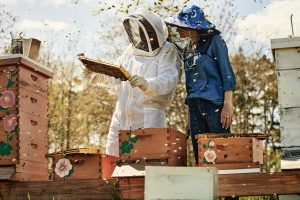
The Honey Exchange leads beekeeping classes and, every spring, supplies a package of bees from its Georgia shipment. From his vantage point, Phil sees that the personal and environmental benefits of keeping bees are tremendous. “It has forced me to get better in touch with my environment,” he says. “You can’t be a good beekeeper and not pay attention to what’s affecting the health of your colonies.”
He’s become closely attuned to weather patterns and is intimately acquainted with some 40 nectar plants, upon which these key pollinators depend. “That understanding of the natural world and the need to be connected to it and understand it have changed me as a person,” he says. “I can’t see it not being a part of my life.”
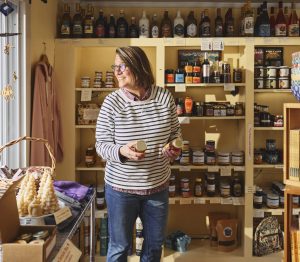
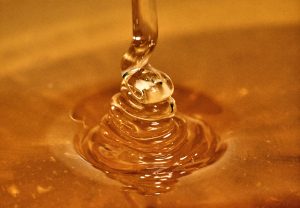
For budding beekeepers, The Honey Exchange is a place to outfit their practice and troubleshoot any issues they might notice with their colonies. Curious onlookers can enjoy the fruits of their labor, too. In addition to the dandelion, knotweed, and coffee blossom honey varietals, the shop sells skincare products made with beeswax.
“Beeswax is good for your skin, and it’s good for the environment,” Phil says. “More people are coming to understand why beeswax is great for candles. Churches realized that centuries ago. In a church, you’re always burning beeswax because it doesn’t produce soot.”
Ready to Get Started with Bees?
- For avid apiarists, Phil recommends reading Kim Flottum’s guidebook, Backyard Beekeeper.
- Many beekeeping courses begin before the arrival of spring. The Honey Exchange offers a beginner beekeeping class as well as a sophomore beekeeping class focused on sustainability.
- The Maine State Beekeepers Association runs classes both in-person and online throughout the state. They also host an annual Bee Fest at summer’s end, where beekeepers and the bee-curious can discover what all the buzz is about.