Former New England mill towns and factory cities have embraced their industrial heritage.
By Lannan M. O’Brien
From pre-industrial gristmills to the textile mills of the Industrial Revolution, water-powered factories played a crucial role in American history. After decades of decline in those industries, many towns in our region have reinvented themselves with revitalized historic buildings, allowing residents, business owners, artists, and museum curators to breathe new life into these structures.
Blackstone River Valley, Rhode Island
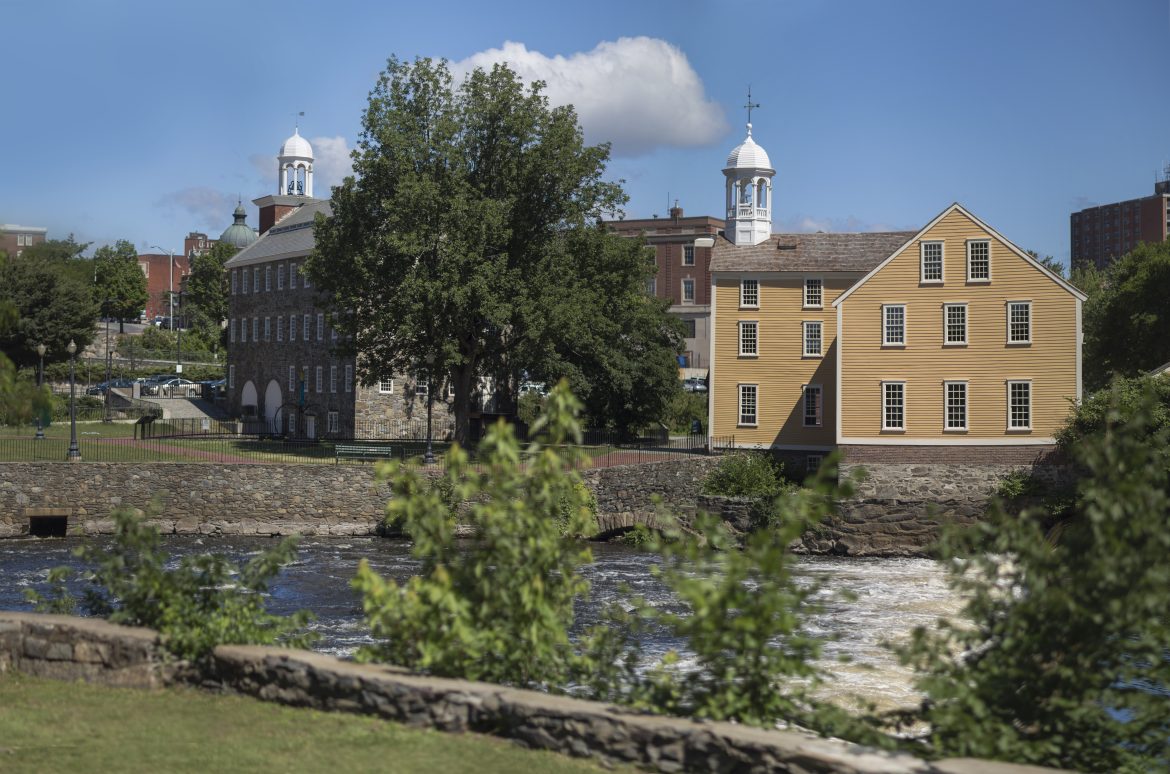
At the heart of the Blackstone River Valley National Historic Park, located in both Rhode Island and Massachusetts, is the Old Slater Mill in Pawtucket, Rhode Island. Samuel Slater’s cotton spinning mill, constructed in 1793, was the first successful water-powered cotton spinning mill in the country, and today it is a National Historic Landmark open to the public.
Visitors to the park can also explore three remaining mill villages— Slatersville, Whitinsville, and Hopedale (the latter two are located in Massachusetts)—of the over 100 that once dotted the Blackstone River and its tributaries. If you get thirsty while on your adventure, you can follow the river to Cumberland, Rhode Island, for a pint at Phantom Farms Brewing, which is housed in the old Berkeley Mill. The building is part of the Berkeley Mill Village, an 1872 complex that also encompassed employee housing and is listed on the National Register of Historic Places.
Southington, Connecticut
Although better known as a “factory town,” Southington found success in the late 1700s in both agriculture and manufacturing. Situated in Hartford County, the area formerly known as South Farmington was established as its own town in 1779. Southington’s manufacturing history is perhaps most evident in Factory Square, a roughly 117,000-square-foot building from 1883 that was formerly the Clark Brothers Bolt Company.
Located along the Farmington Canal Heritage Trail—a 56-mile paved trail that follows the former New Haven and Northampton Railroad—the brick building owned by Florian Properties now houses an array of local businesses, such as a coffee shop, a brewery, an axe-throwing and entertainment center, and a recently opened spa and whiskey bar. Less than three miles away is another remnant of Southington’s past: the New Mill Restaurant, built in 1737 as a mill of steel, paper, grist, and cedar. Today, customers can enjoy Italian dishes and locally sourced steaks amid the building’s original beams and walls.
Lowell, Massachusetts
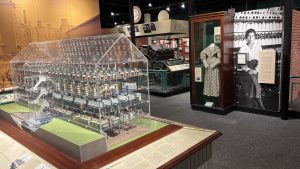
A planned mill city for the production of textiles, Lowell played a key role in America’s Industrial Revolution. And evidence of its past can be found in many local businesses, community spaces, and apartment buildings along the Merrimack River, which powered the city’s textile mills. History certainly has not been forgotten: Lowell’s industrial success is on full display through Lowell National Historic Park, which comprises museums (the Boott Cotton Mills Museum, a must-visit, includes a weave room with over 80 working power looms from the 1920s), a cultural center, mill tours, canal walkways, and riverboat and walking tours.
At the Mogan Cultural Center, located in a historic boarding house, learn about the lives of the Lowell “mill girls” and tour reconstructed boarding house rooms, as well as other exhibits. Outside the park, history abounds: enter a brick building, and the chances are high that it has ties to textile manufacturing. One example is Western Avenue Studios, a complex of repurposed mill buildings that were converted into artist studios and lofts (it’s also the home of Navigation Brewing Co.).
Woodstock, Vermont
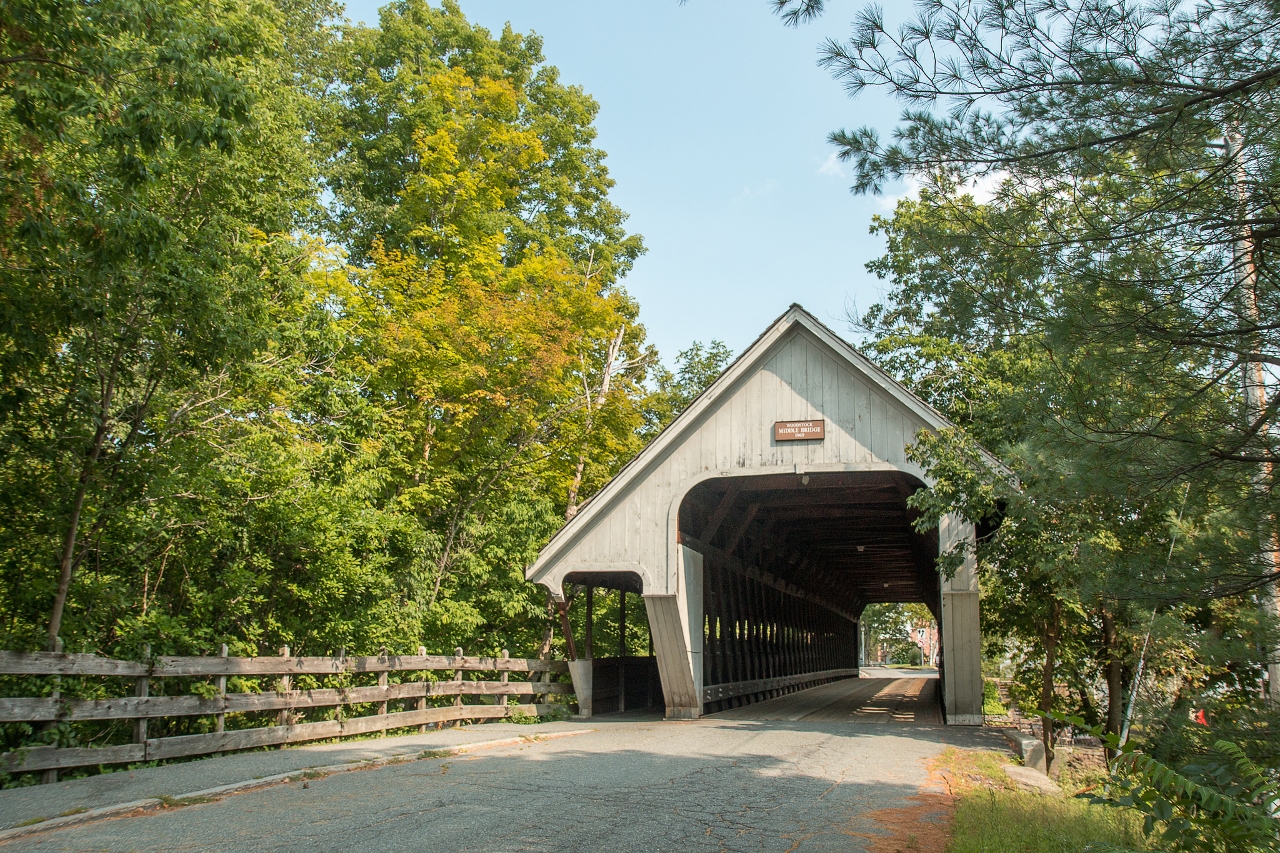
Woodstock may be small in size—its population is about 3,000—but it’s big on character. In addition to a thriving arts scene, antiques shopping, and outdoor recreation, the community has a rich industrial history that it has made efforts to preserve. Woodstock is home to three designated historic districts and two additional historic “hubs,” which were mainly centered around mills and factories.
A few of its historic mill buildings have been given new life: Long before offering pickleball leagues and swimming lessons, the 1790 building that houses the Woodstock Recreation Center was, at different times, the site of saw and grist mills, a gin distillery and malt-house, and a carding mill (for wool production), among other purposes; the Bridgewater Mill Mall complex, a shopping and craft center, is located in a former woolen mill; and the stone building now known as The Collective art gallery was once a water-powered linseed oil mill, built in 1792. It’s worth a trip to the Woodstock History Center to learn more about the town and its mills, woodstockhistorycenter.org.
Manchester, New Hampshire
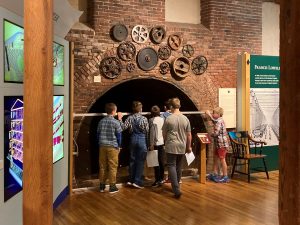
If you’ve heard of Manchester, New Hampshire, it’s likely due to the influence of the Amoskeag Manufacturing Company. The textile mill, once the largest in the world (it was the lead denim supplier for Levi’s in the 1870s), led to Manchester’s growth and development, a piece of history it celebrates today through the Millyard Museum. Located in Mill No. 3 in the Amoskeag Millyard, the museum offers exhibits, a gallery, and walking tours along the Merrimack River, which, through the development of a canal-and-lock system, played a key role in Manchester’s industrial success.
Outside the museum, many old buildings that once housed machinery serve modern purposes. The red brick provides a cozy atmosphere for a pint at Stark Brewing Co., and the same building is home to Franklin Pierce University in Manchester. Further down the river, a 90,000-square-foot mill building that was once a shoe factory is now The Factory on Willow, a mixed-use development featuring studio apartments, event spaces, a food truck patio, and a distillery.

Biddeford, Maine
Biddeford was known as an industrial giant, before becoming a beloved tourist destination. Downtown, mom-and-pop businesses are tucked into red brick buildings, their signs advertising coffee shops, craft breweries, bars, and restaurants.
While many are drawn to the nearby white-sand beaches in summer, these historic streets provide a community hub year-round, and you can book a walking tour to explore them with the Biddeford Mills Museum (biddefordmillsmuseum.org); they’ll lead you through a cotton house, a weave shed, and the underground canals that powered the textile mills. The museum’s home base is the 17-acre Pepperell Mill Campus, which was transformed into a mixed-use community of apartments and condos, artists’ studios, and commercial spaces.